One prompt, a whole 3D supermarket-style design site from Claude Code: every service is a can, pouch, tube or carton
A fictional studio site: 4 services as 3D packs with nutrition-label cards and a stamped receipt quote, all drawn in three.js by Claude Code. Full prompt.
Watch the reel on InstagramComment #超市 to get this guide
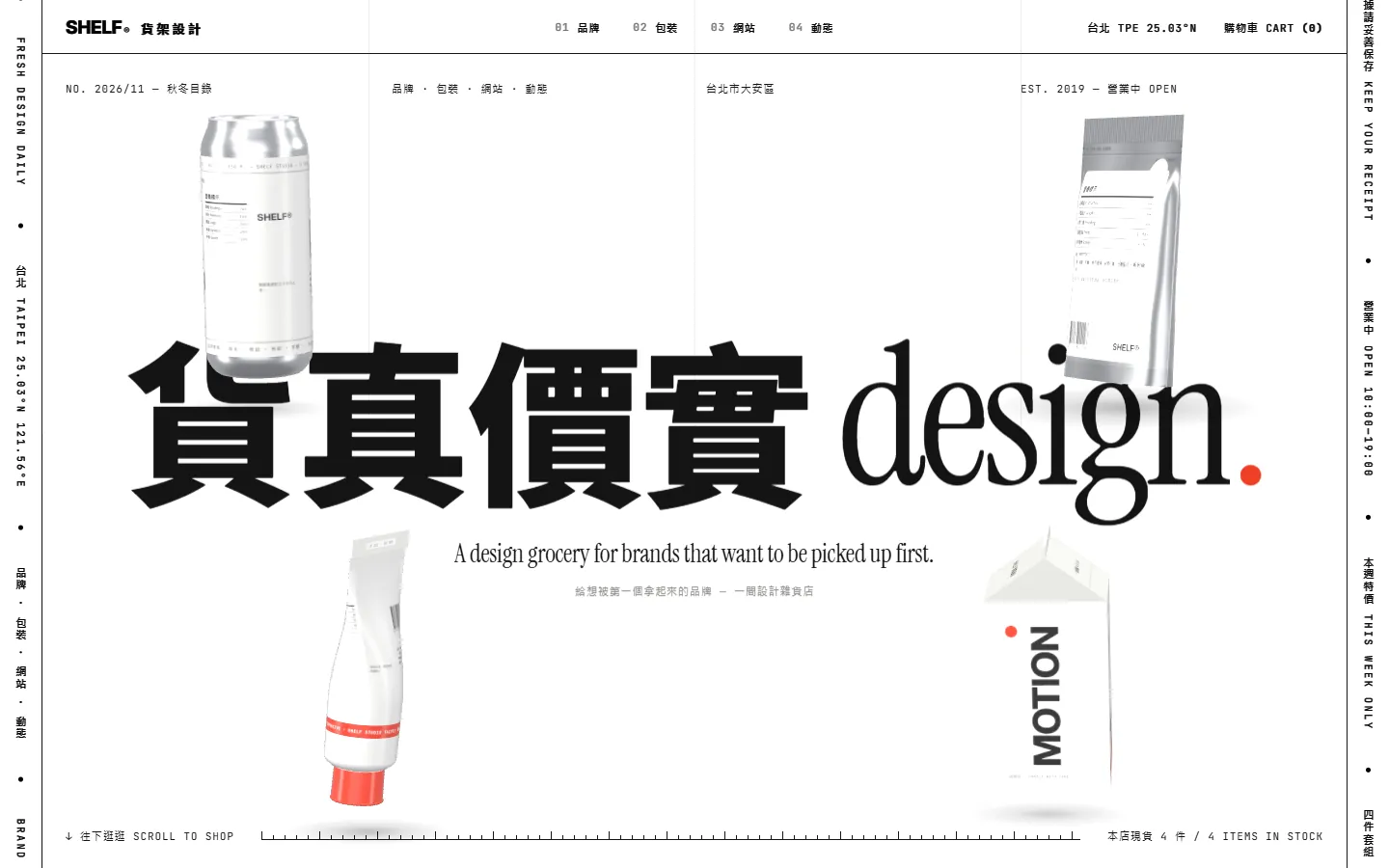
Can you believe Claude made this whole website? A design studio turns its four services into products on a supermarket shelf: brand identity is a drink can, packaging design is a foil pouch, web design is a tube and motion design is a milk carton. Each one has a nutrition-label card next to it, and the quote prints out as a receipt.
SHELF 貨架設計 is a fictional studio. We gave Claude Code one prompt and didn't change a word of the site, and every image below is a real screenshot of it. You get that prompt (swap the [ ] parts for your own), the extra requirements that make it check its own work, and how to turn it into your own site.
01The result: scrolling down feels like walking along a shelf
- Opening: a pure white background, the can, pouch, tube and carton float in, and small vertical marquees run down both sides.
- About: big type slides in line by line, with the words for "eye level" in tomato red.
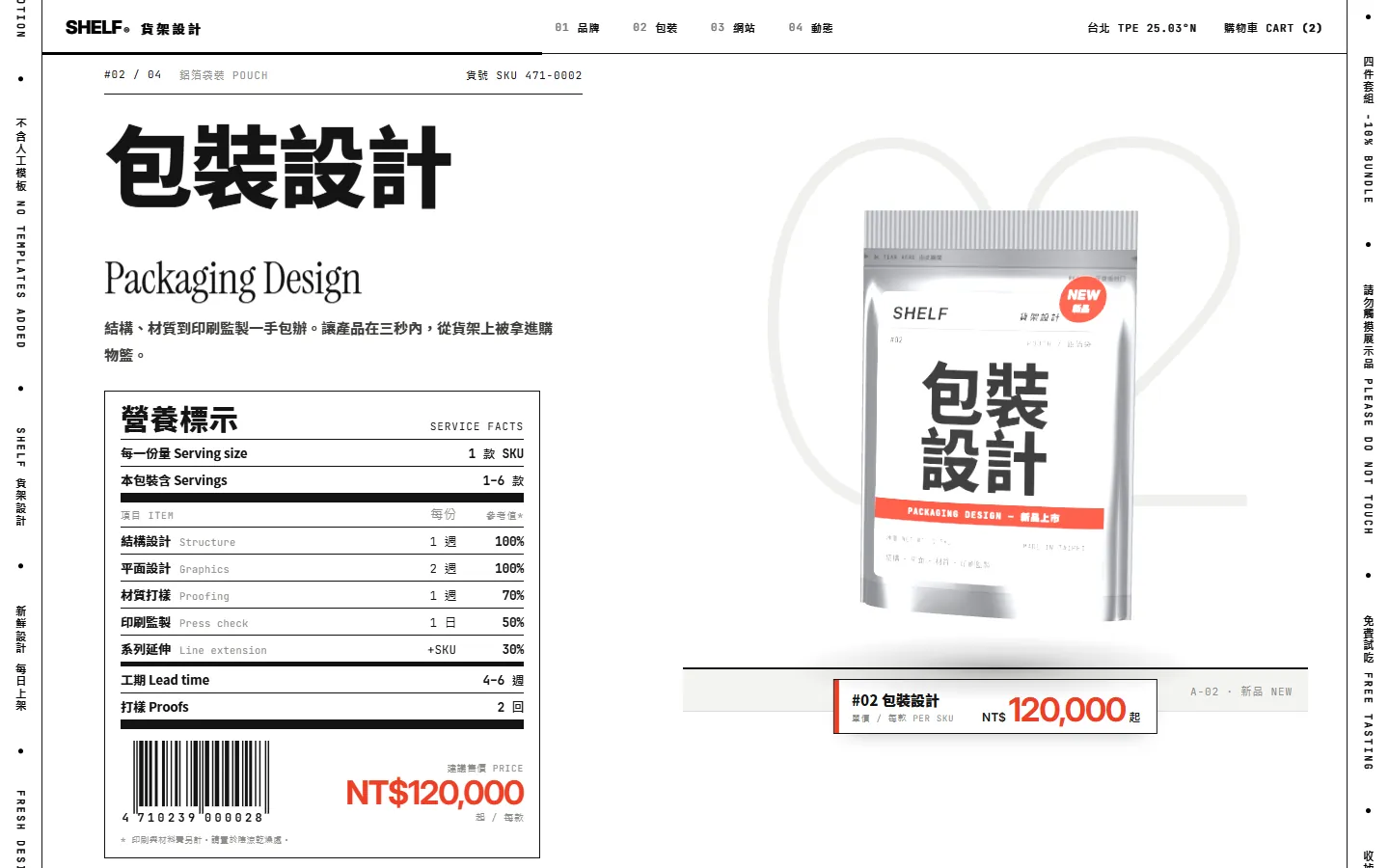
- Four services: #01 to #04, one screen each, with a 3D pack, a nutrition-label card and a price tag; the cart counter at the top right goes from (0) to (4).
- Cart: a receipt prints out of a register bit by bit and gets a red 已報價 ("quoted") stamp at the end.
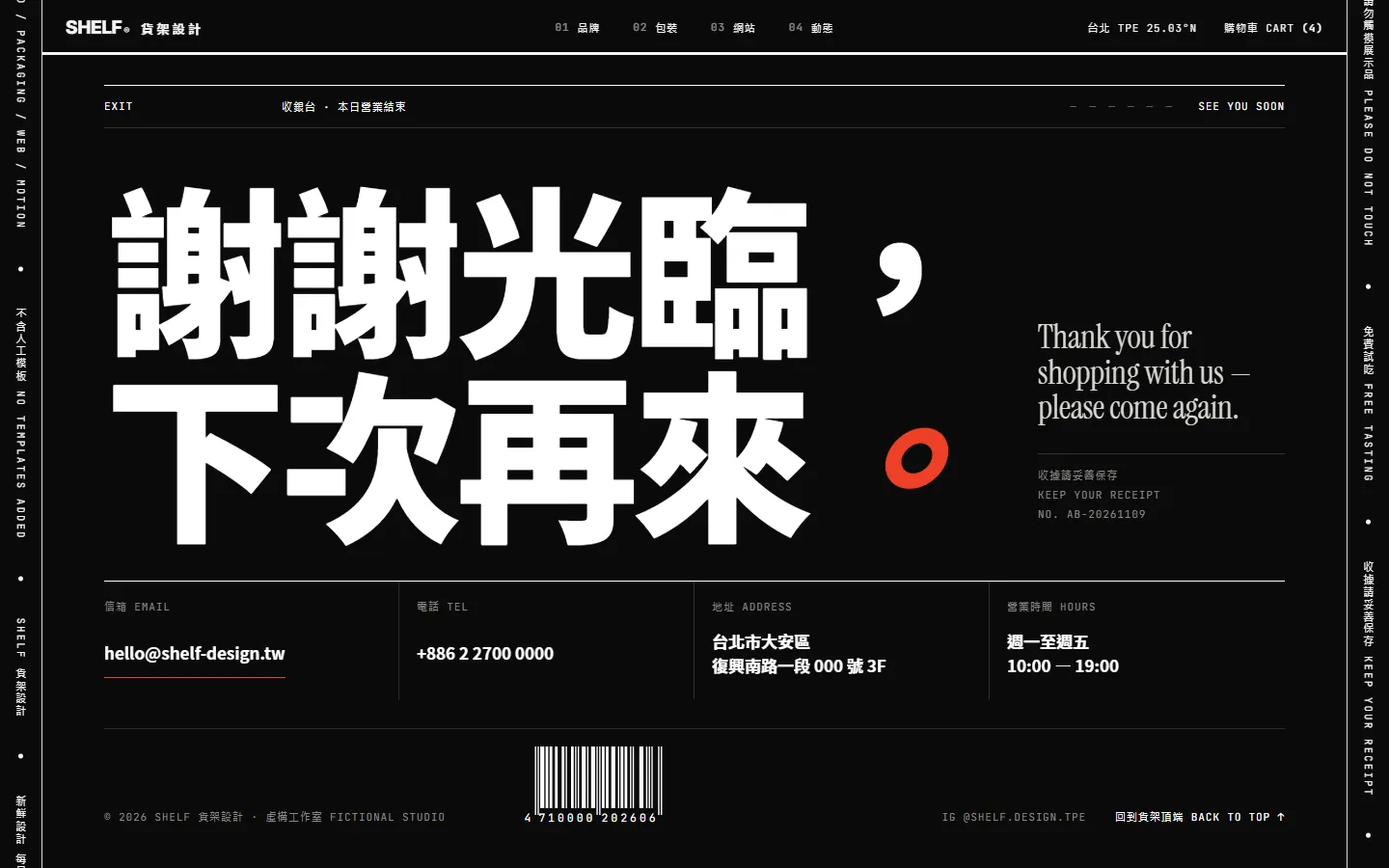
- Ending: an all-black screen with huge type 謝謝光臨,下次再來 ("thanks for shopping, please come again") and contact details.
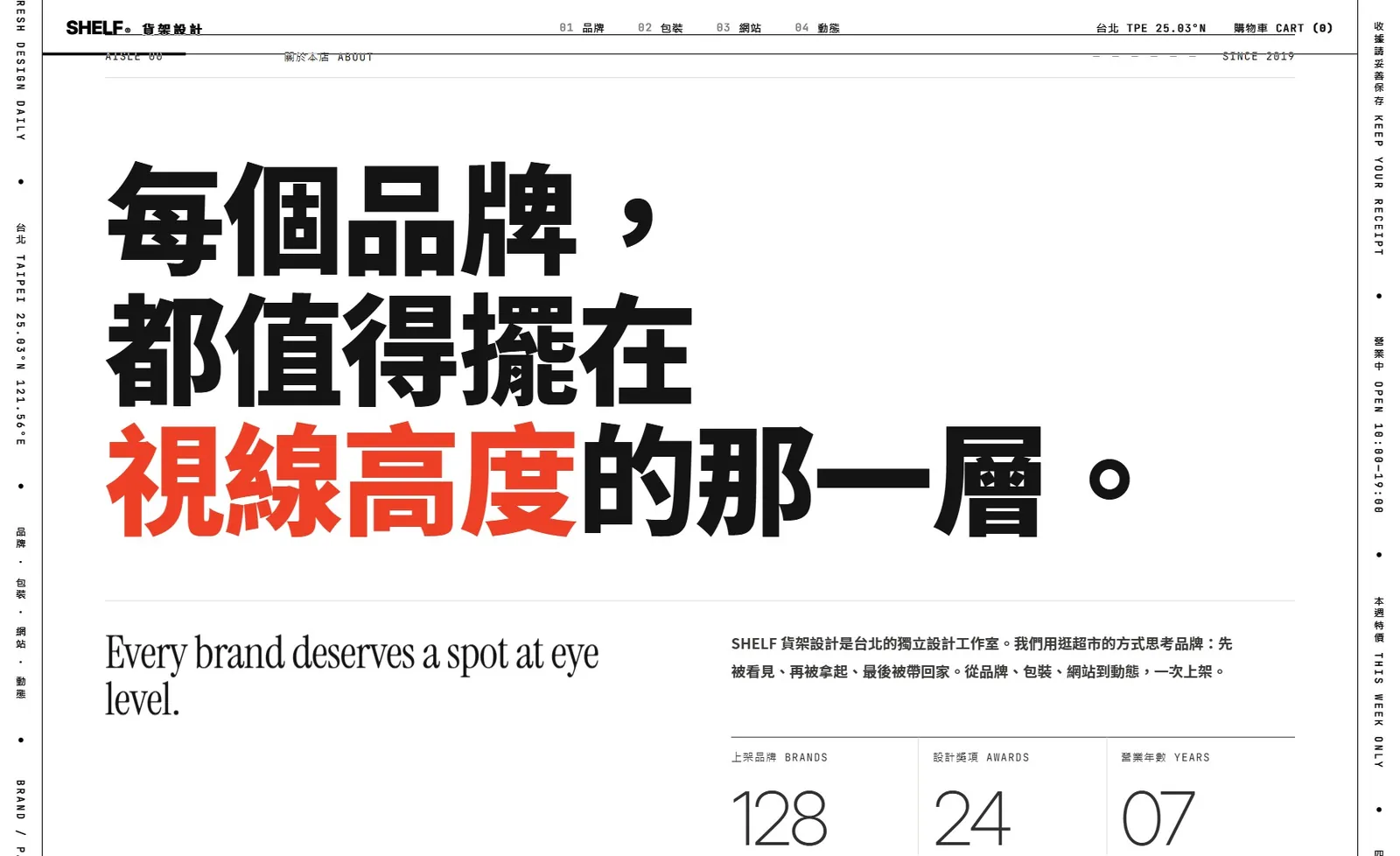
The whole site is 6 files: index.html, style.css, main.js (3D scene, lighting, scroll animation), packages.js (the four packs), textures.js (every label) and barcode.js (the barcodes). On a 1440×900 screen the page is about 10,000 px tall.
02Step 1: paste this prompt into Claude Code
We used Claude Code because it creates the files on your computer and can open a browser, take screenshots and check its own work. This run took about 29 minutes; it took screenshots and fixed things by itself, and we added no design instructions.
- Open Claude Code (terminal or desktop app).
- Make an empty folder and start Claude Code inside it.
- Paste the whole prompt below (with your own [ ] parts) and press Enter.
Build me a portfolio website for a [design studio] in three.js, styled like an [upmarket supermarket].
The studio is called "[STUDIO NAME]" (fictional, [city]) and its services are [brand, packaging, web, motion].

1. Opening: a [pure white] background where four 3D packs ([a foil pouch, a drink can, a tube, a carton]) float in from off screen and slowly turn, with one huge editorial headline in the middle.
2. Every service is a 3D packaged product that floats in one by one as you scroll: #01 [brand identity = drink can], #02 [packaging design = foil pouch], #03 [web design = tube], #04 [motion design = carton]. Next to each, a product label card: a barcode, the service contents listed like a nutrition-facts table, and the price.
3. Build every pack yourself from three.js geometry and canvas textures, with no external models or images. Colours: [white, light grey and a touch of tomato red].
4. Big type slides in line by line, a small vertical marquee runs down the sides, and add a "[shopping cart]" quote that lists the total as a [receipt].
5. The last section is all black: huge type "[Thanks for shopping, please come again]" plus contact details.
6. It should feel like an award-winning site: lots of white space, hairlines, small monospace text, refined typography.
- Claude Code — Works in the terminal, the desktop app and VS Code
- three.js — Free, open-source 3D library for the web
03Step 2: add requirements so it screenshots and checks itself
The prompt covers the look; this part covers how to build and check it. We gave it to Claude Code together with the prompt, pasted right after it:
Technical requirements:
- Put every file in this folder, with index.html as the main file.
- Put three.js in lib/ and load it with an importmap.
- Use local font files from fonts/ ([e.g. Noto Sans TC, Inter, JetBrains Mono]), no Google Fonts.
- Native browser scrolling only: no smooth-scroll library and no scroll-jacking; drive the animation from requestAnimationFrame and the scroll position.
- Desktop [1440×900]. When you're done, take screenshots at several scroll positions in headless Chrome (puppeteer), look at each one and fix whatever is wrong.
After looking at its own screenshots, Claude Code fixed these by itself: bigger packs in the opening, each service shrunk to fit one screen, the price tag on one line, a cart counter that goes up, a darker carton roof, the stamp moved off the total, and the black ending fitted to one screen.
04Step 3: where do the four packs come from? Not a single 3D model
Point 3 of the prompt says "no external models or images". So all four packs are shapes put together in code, and the labels are drawn on a web canvas first and then wrapped on.
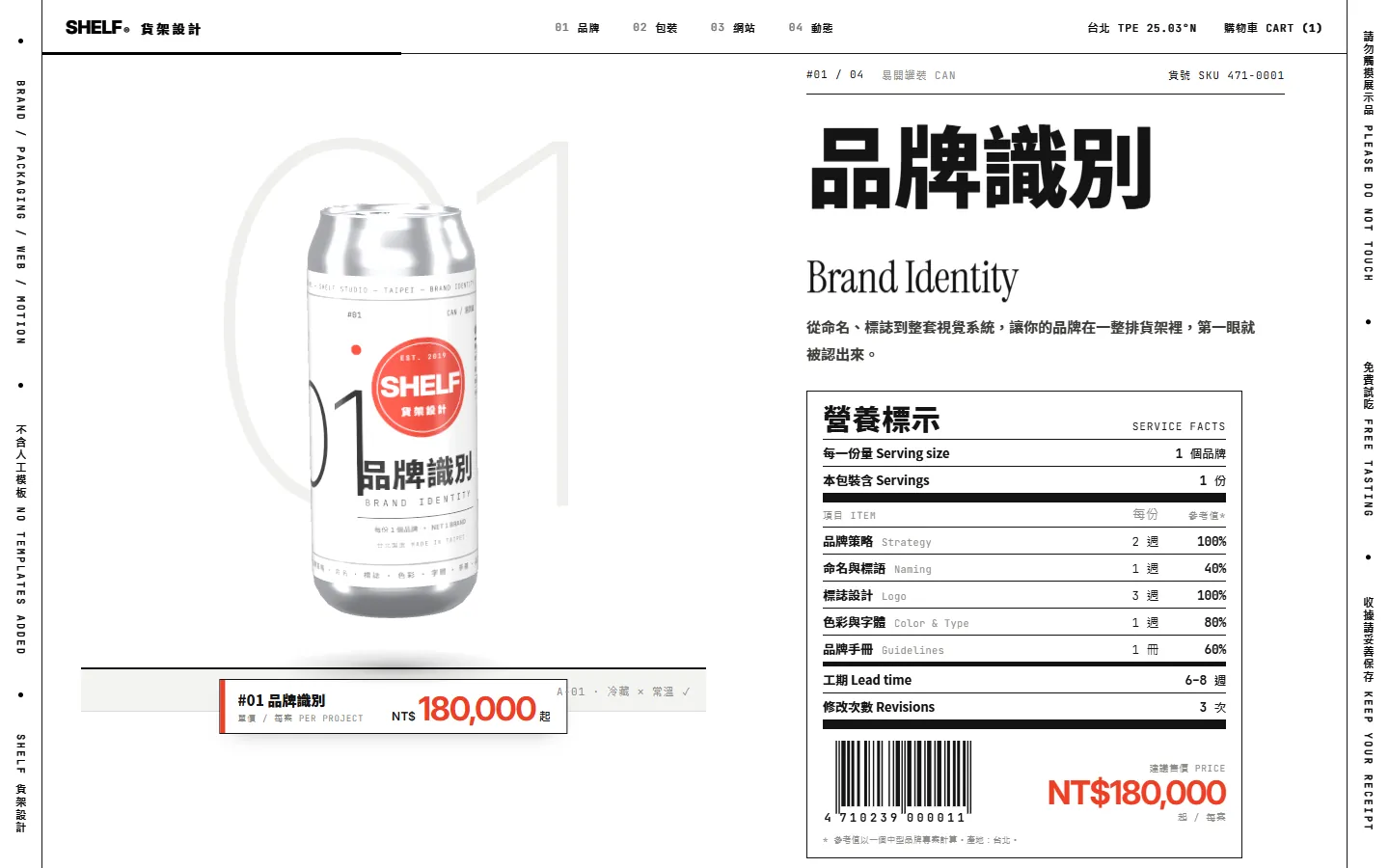
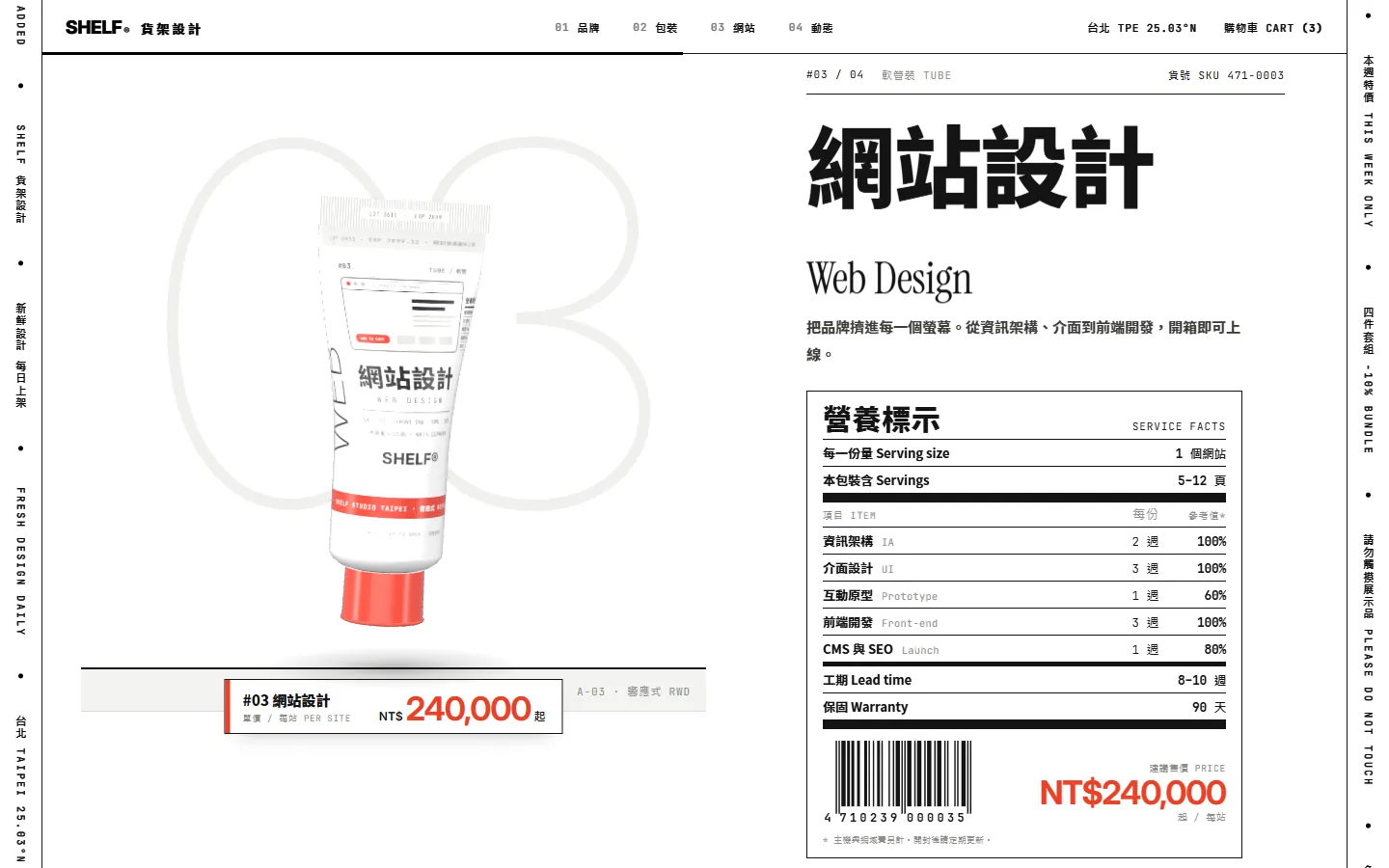
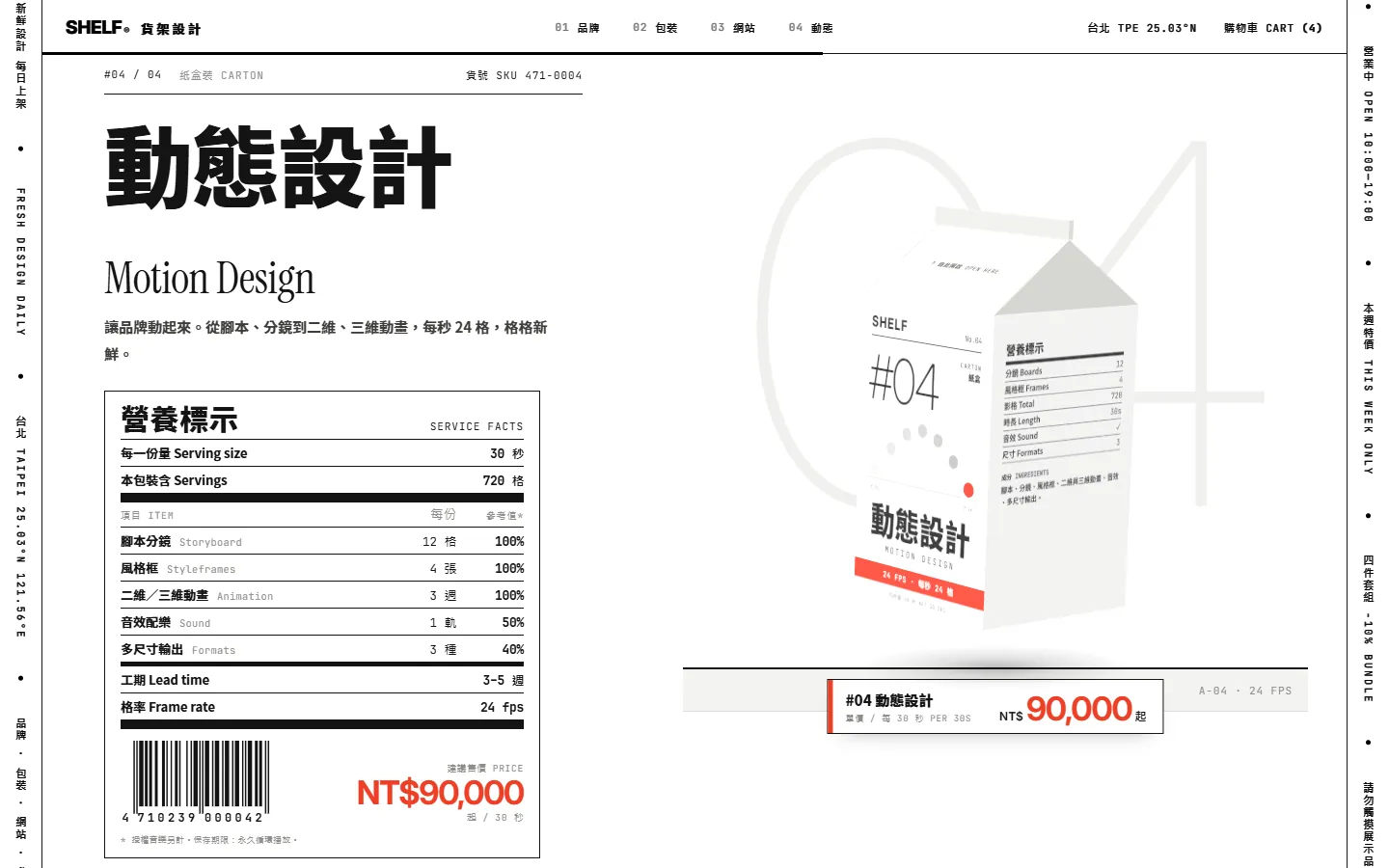
- Can: LatheGeometry (a profile spun around) with a metal material; the pull tab is a separate extruded part.
- Foil pouch: a flat plane cut into many small squares, each point pushed forward a little so the edges stay thin and the middle bulges.
- Tube: cylinder + shoulder + red cap + a crimped seal.
- Milk carton: box + two sloped roof panels + a top seal.
- Labels: all drawn on canvas, with real text, so changing a service name needs no new artwork.
05Step 4: services as nutrition labels, the quote as a receipt
The most fun part of this site isn't the 3D, it's showing information in a new form. The card next to each service is a nutrition-facts label:
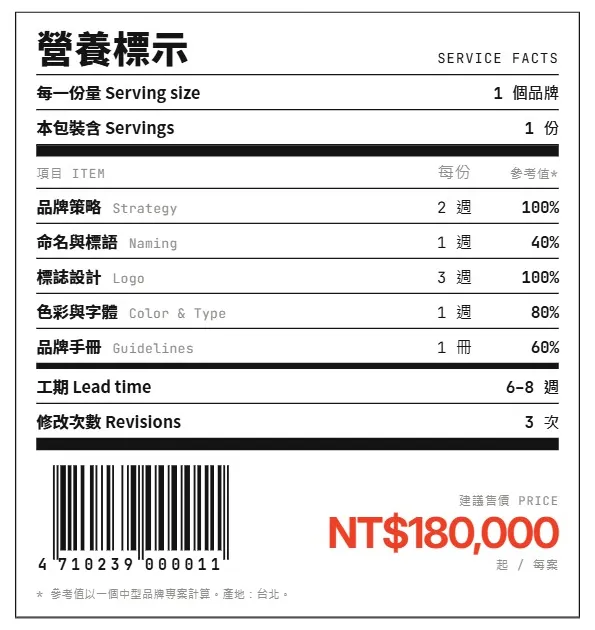
- Serving size / servings: how much the service covers (1 brand, 5-12 pages, 30 seconds).
- Items: the work included in the service, each with its time.
- Bottom two rows: lead time plus revisions, proofs, warranty or frame rate, the things clients ask most.
- Barcode: Claude wrote an EAN-13 barcode generator that even computes the final check digit, so it scans.
- Price: big tomato-red type, matching the price tag under the pack.
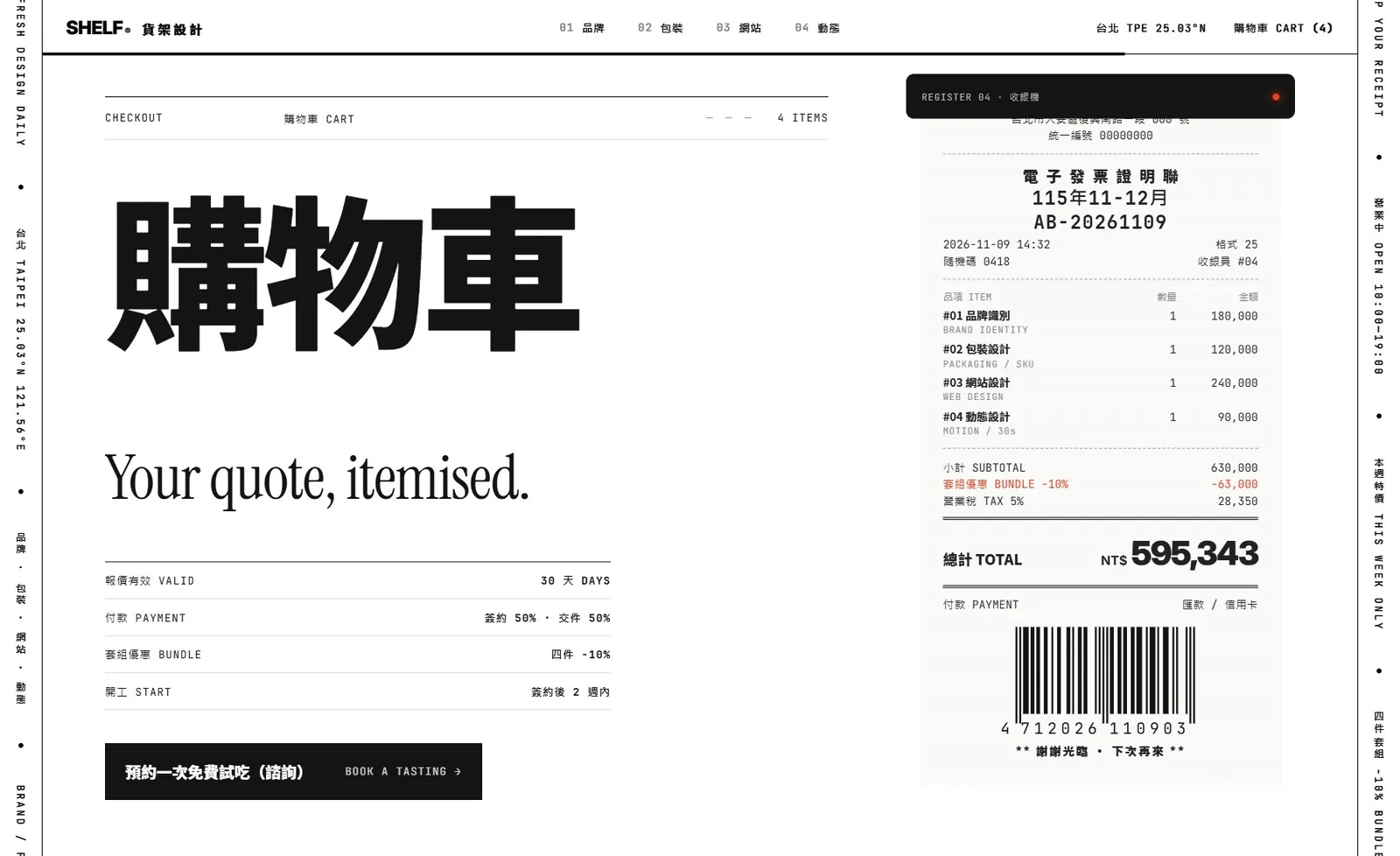
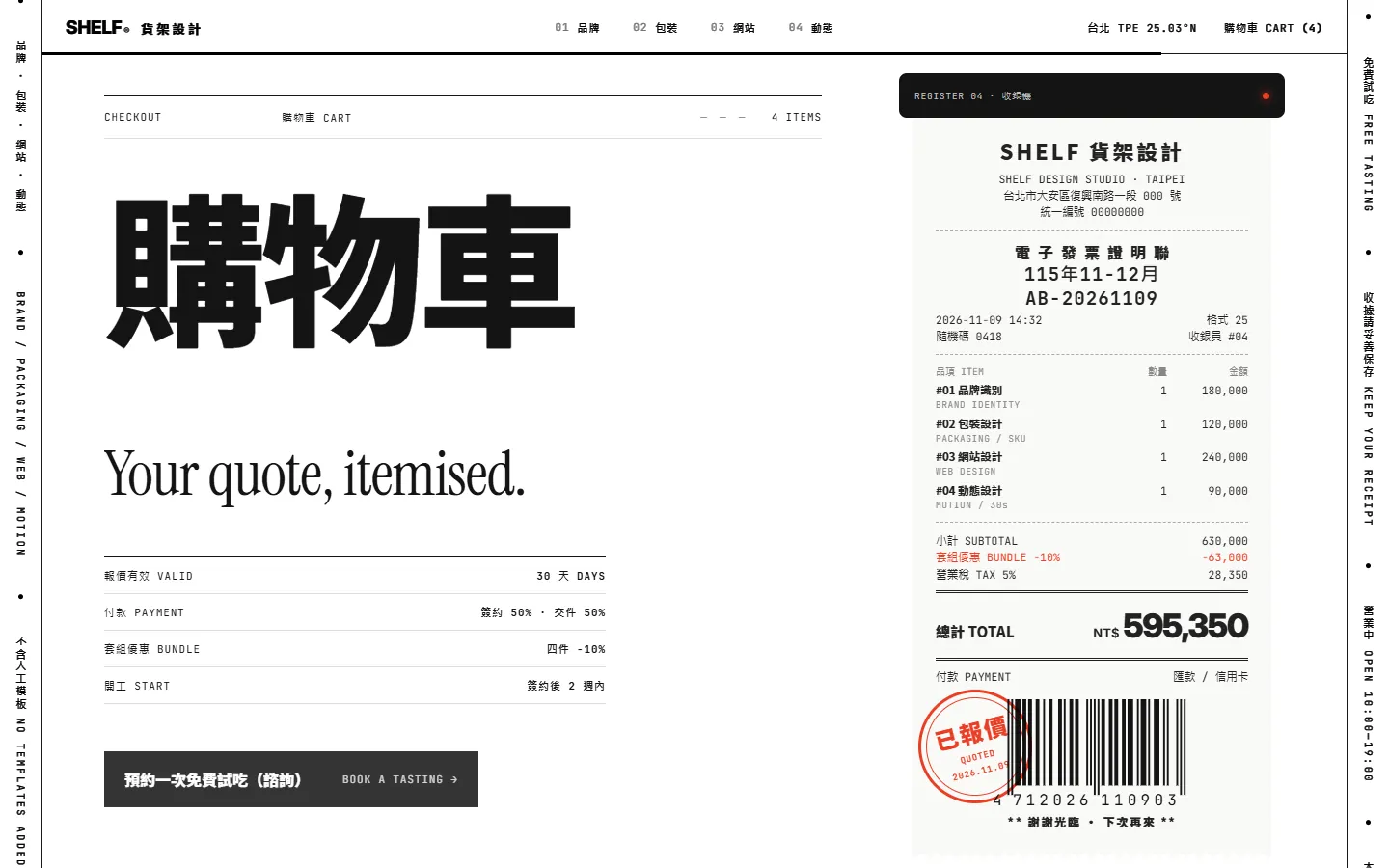
The receipt is laid out like a Taiwanese e-invoice slip: shop name, period, random code, items, subtotal, barcode, and a last line saying "thanks for shopping, please come again". It is tied to the scroll: the further you scroll, the longer it prints, and the stamp lands at the end.
06Step 5: make it your own site
- Name and contact details: change them in the prompt; afterwards you can also tell Claude "put all the shop details in one place so I can edit them".
- Services and prices: use services you really offer, and change the times and lead times on the label cards to yours.
- Theme: the supermarket can become a bookshop (one book per service), a pharmacy (pill boxes with directions) or a record shop (one record per service), as long as every service matches a product.
- Opening the site: it uses ES modules, so double-clicking index.html shows a blank page. Run npx http-server in the folder and open the address it gives you in a browser.
- Going live: upload the whole folder to any static host, such as GitHub Pages.
- GitHub Pages — Host a site straight from a GitHub repository
07Good to know
- SHELF 貨架設計 is a fictional studio: the address, phone, email, IG handle, award numbers and all prices are demo data Claude made up, not pricing advice.
- The receipt only looks like an e-invoice; its tax ID and period are fake, so it can't be used as a real invoice.
- The barcodes scan, but the numbers are made up, so don't print them on real products.
- Claude Code needs a paid Claude plan (such as Pro or Max) or an API account.
- This version is desktop only (1440×900) with no mobile layout. Ask Claude for a mobile version before going live; 3D sites are also heavier than normal pages and may be slow on older phones.
- The Chinese font files used here (Noto Sans TC Bold and Black) add up to about 35 MB. Before going live, ask Claude to subset them (keep only the characters used) or switch to WOFF2, or the site will load slowly.
- The fonts Noto Sans TC, Inter, JetBrains Mono and Instrument Serif are all under the open SIL OFL licence, and three.js is MIT licensed, so all can be used commercially.
- The laptop and desk in the video are an AI-generated image; the site on the screen is what Claude Code really built, and the screenshots here are of the site itself.
- This was made in November 2026 with Claude Code and three.js r160. The same prompt won't give exactly the same layout and pack details every time.